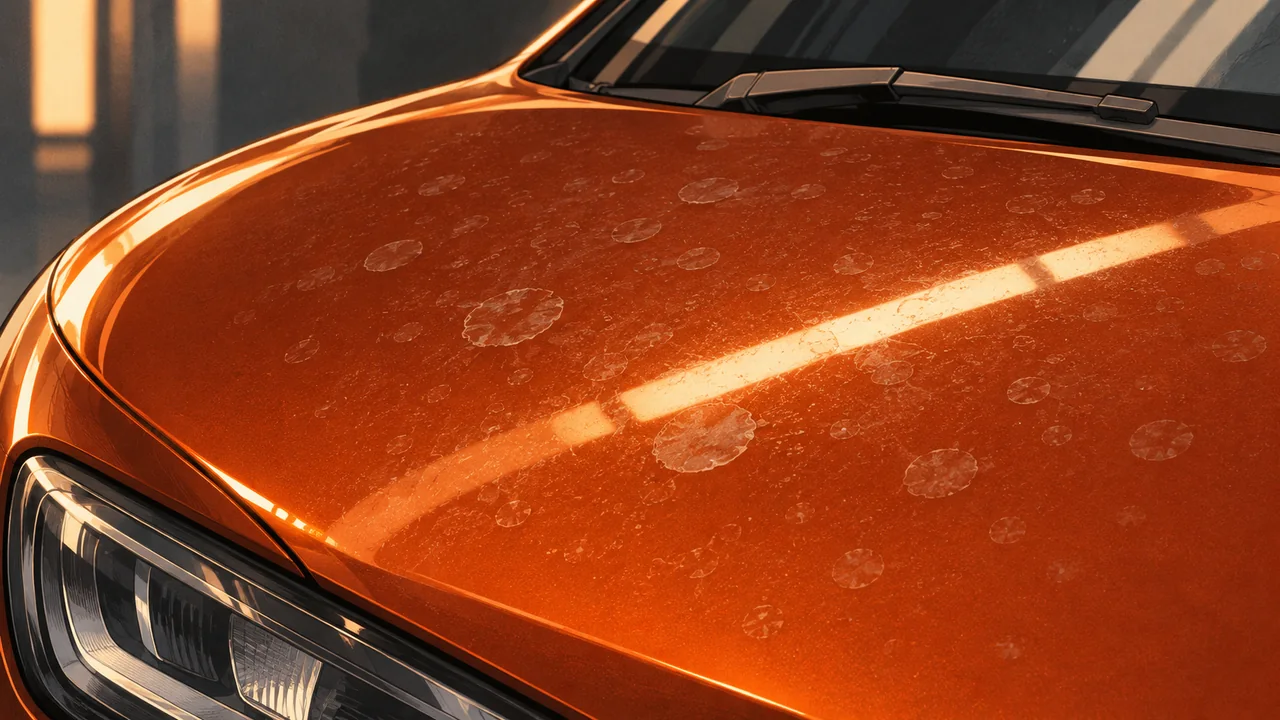
Water spots can be deposits on a surface, a change in the finish beneath them, or both. A cleaner that removes mineral residue cannot rebuild damaged paint. The first job is to identify the affected material and determine what remains after appropriate cleaning.
This distinction matters on coated vehicles too. A hydrophobic surface can still collect deposits. Seeing rings after rain, a sprinkler or a wash is a reason to inspect the finish, not immediate proof that a coating has failed.
Start with the surface, not the bottle
A painted hood, windshield, plastic trim piece and aftermarket film do not automatically accept the same treatment. Record where the spots appear and whether the vehicle has a coating, film, wrap, repaint or matte finish. Those details affect product compatibility and the limits of correction.
For example, Griot’s Garage describes its Water Spot Remover as targeting above-surface deposits. That product description is useful because it defines the problem being treated. It is not evidence that every water mark can be chemically removed, or that a product is suitable for every specialty finish.
Deposits sit on top; etching changes the finish
Minerals can remain when water dries. If a compatible process removes that residue and the underlying finish looks unchanged, further abrasion may be unnecessary. If a visible outline or depression remains, a technician should assess whether the finish has been etched or otherwise damaged.
Dr. Beasley’s published checklist treats topical deposits and etched spots as different situations. It separates deposit removal from a polishing evaluation. The important takeaway for an owner is the sequence of decisions, not a universal product recipe or dwell time.
A remaining mark can also have another cause. Do not assume every circular defect is mineral etching. A technician may need to compare the appearance after cleaning under more than one light and ask about prior products, washing and paint repair.
What an appropriate test should tell you
- What surface is involved? Confirm paint, glass, trim or a protective film and check applicable care guidance.
- What is removable contamination? Evaluate a small area with a compatible method before committing to the entire vehicle.
- What remains? Inspect the dry area, with residue removed, rather than judging a wet or freshly dressed surface.
- What improvement is sensible? Discuss whether correction offers useful improvement within the finish’s limits.
The aim is a supported recommendation. The test may justify simple maintenance, selective correction, a specialist referral, or leaving a faint defect rather than removing more finish.
Why stronger chemistry is not automatically better
Product labels and the vehicle or coating manufacturer’s instructions control where and how a cleaner may be used. An internet recommendation for one paint finish does not establish compatibility with your trim, glass treatment or film. Do not combine cleaners or improvise an acid mixture.
Tell the shop what you have already used, including a household cleaner. If the exact product is available, provide its name or a label photo. A brief, accurate history is more helpful than another round of experimenting.
An illustrative decision
Two vehicles park near the same sprinkler. The first has recent deposits that an appropriate maintenance treatment removes. The second has older rings that remain after residue removal. Giving both vehicles the same “water-spot removal” quote before inspection could over-treat the first or understate the work on the second.
Ask whether the estimate covers deposit removal, polishing, or both. If correction is added, ask what happens to existing protection and whether preparation or reapplication is included. This prevents paying for overlapping steps without understanding the finished result.
Reduce the chance of another visit
Avoid repeat sprinkler exposure where practical, arrange washing when the surface can be properly dried, and follow the care instructions for the protection installed on your vehicle. If spots recur in one location, note the parking position and water source. Better information can be more valuable than a different bottle.
For marks that remain after ordinary washing, request a paint-condition assessment at Lava GR. Include photographs and your coating history. Our ceramic-coating information can help frame the follow-up care discussion, without treating a coating as immunity from water spotting.
Sources and further reading
- Water Spot Remover — Griot’s Garage.
- Water Spot Removal Checklist — Dr. Beasley’s.