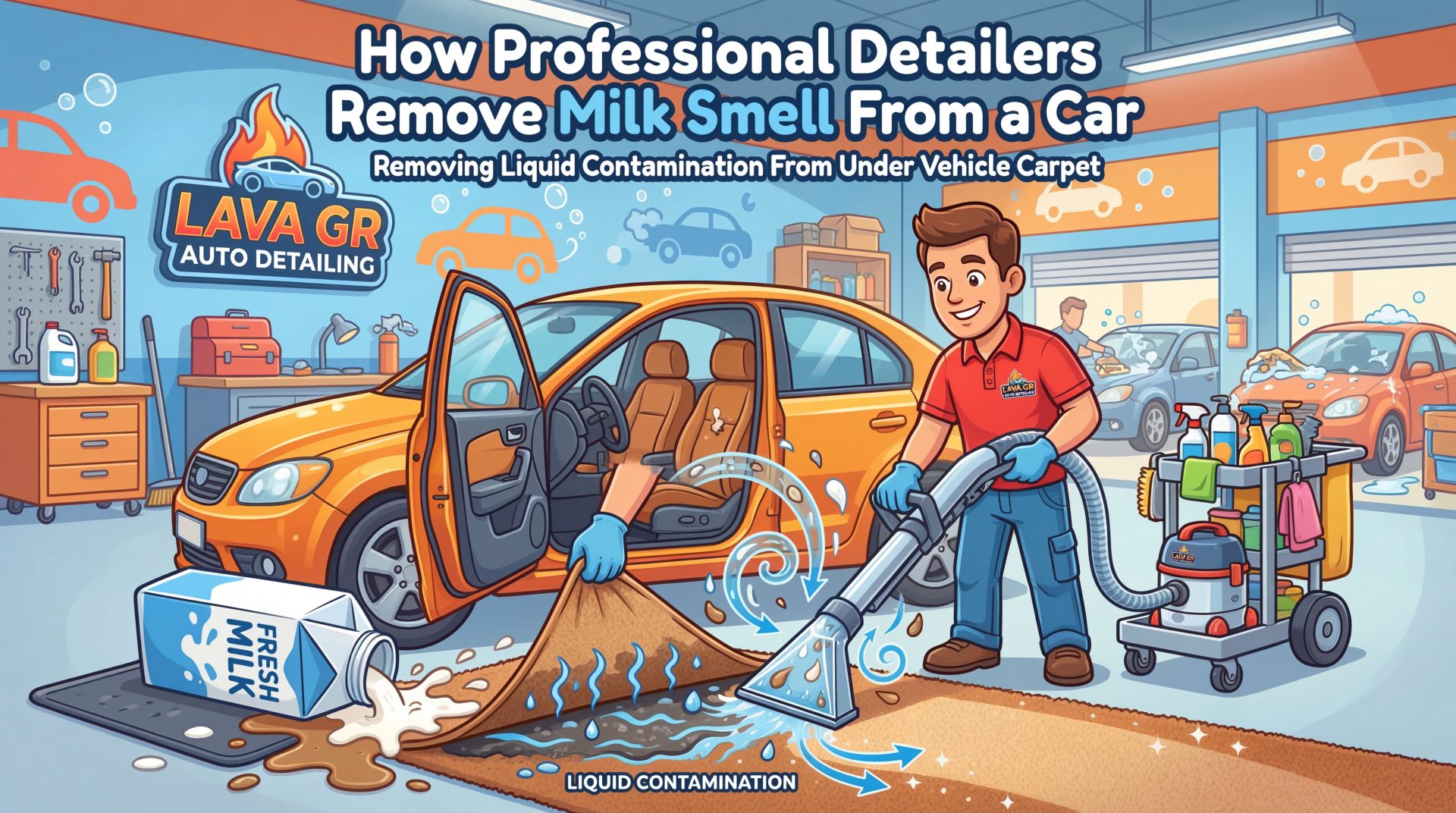
Spilling milk inside a vehicle may seem like a simple mess, but it can quickly turn into one of the worst interior odor problems a car owner can experience.
Milk contains proteins and sugars that bacteria rapidly begin breaking down once the liquid soaks into vehicle materials. As the milk decomposes, it releases strong odor compounds that spread throughout the interior of the vehicle.
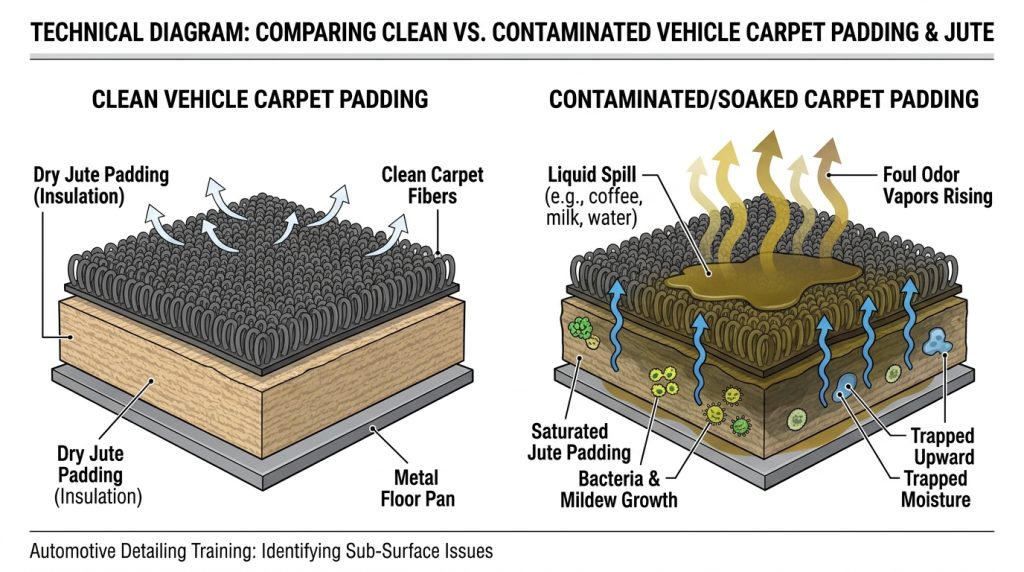
What many people do not realize is that vehicle interiors are built like a sponge. Liquids rarely stay on the surface. Instead, they travel deeper into the materials beneath the carpet and seats.
If the contamination reaches those deeper layers, the smell can return even after the surface looks clean.
What Causes Milk Smell in Car Interiors
Milk smell in car interiors happens when dairy proteins soak into carpet fibers, seat foam, or insulation beneath the flooring. Once bacteria begin breaking down the milk, strong odors develop inside the vehicle.
Why Milk Smell Is So Difficult to Remove
Milk smell in car interiors can become one of the most difficult odors to remove if the contamination spreads into carpet padding or seat foam.
A sour milk smell in car interiors often means the liquid has soaked into the carpet padding.
Most vehicle interiors contain multiple absorbent layers including:
• carpet fibers
• jute padding beneath the carpet
• seat foam
• insulation materials
When a spill occurs, liquids often move through the carpet and into the padding underneath. Bacteria then begin breaking down organic material trapped inside these layers, which produces strong odor compounds.
This is why many people clean a spill only to have the odor return days later.
In our professional remediation work, we frequently see situations where the milk has traveled far beyond the visible spill area. In some cases it can even spread beneath seats or along carpet seams.
The most important rule of odor removal is simple:
The contamination source must be removed.
Milk smell in car interiors often comes from contamination trapped under the carpet padding, which is why professional interior car detailing sometimes requires lifting the carpet to remove the source.
If the source remains trapped inside the vehicle, the odor will eventually return.
The Three Levels of Interior Contamination
In our training systems we classify interior contamination into three levels depending on how deeply the contamination has penetrated the vehicle.
Level 1 — Surface Contamination
The spill remains on the visible surface of the carpet or seat.
These situations can often be resolved with:
• interior extraction
• enzyme cleaners
• sanitation treatments
Level 2 — Material Penetration
This is extremely common with milk spills.
The liquid has penetrated into:
• carpet padding
• seat foam
• seams between materials
At this stage, odors may return after cleaning and the vehicle may require deeper remediation such as seat removal or carpet lifting.
Level 3 — Structural Contamination
If contamination is left untreated for a long period of time, it can spread throughout the vehicle interior.
These situations may require:
• extensive interior disassembly
• replacement of padding or insulation
• multi-stage sanitation procedures
Can You Remove Milk Smell Yourself?
If the spill is fresh, there are a few steps you can try.
- Blot the spill immediately
Use towels to absorb as much liquid as possible. - Use an upholstery cleaner
Automotive upholstery cleaners help break down organic residue. - Perform carpet extraction
Extraction removes liquid trapped in carpet fibers. - Allow the interior to fully dry
Moisture left behind can worsen odor problems.
However, if the milk has already soaked into the padding beneath the carpet, these methods may only reduce the smell temporarily.
When Professional Interior Restoration Is Needed
Severe spills often require professional remediation techniques such as:
• deep carpet extraction
• seat removal
• carpet lifting
• sanitation treatments
• padding replacement in extreme situations
These procedures allow technicians to remove contamination from the source instead of masking the odor.
Our team has restored vehicles affected by everything from milk spills and food contamination to mold, flooding, and biological contamination.
We Literally Wrote the Book on Biohazard Detailing
At Lava GR Auto Detailing in Grand Rapids Michigan, contamination restoration is one of our specialties.
Our team has been restoring severely contaminated vehicles for years, and we documented many of those procedures in The Biohazard Detailing Playbook, a professional training resource that teaches detailers how to properly diagnose and remediate contamination inside vehicles.
The book explains:
• how contamination spreads through vehicle interiors
• how to identify contamination severity
• the proper tools and chemicals for remediation
• why surface cleaning alone often fails
This knowledge allows us to restore vehicles that many detailing shops simply do not have the training to handle.
If you want to learn more about contamination restoration, visit our full guide on:
This page explains the remediation process in detail and shows how severe interior contamination is professionally restored.
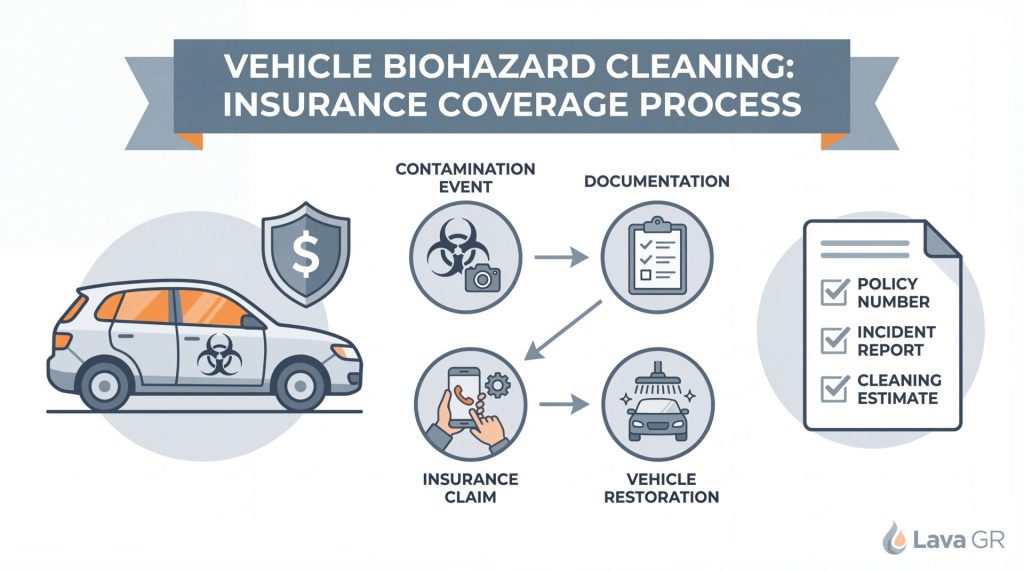
Insurance May Help Cover Interior Contamination Cleanup
Many people are surprised to learn that some contamination situations may be covered by comprehensive auto insurance.
Examples can include:
• severe interior spills
• flooding or water intrusion
• mold contamination
• rodent infestations
• biohazard contamination events
When we handle contamination jobs, we document the condition of the vehicle before beginning work. This documentation can help support insurance claims if coverage applies.
In many cases, comprehensive insurance claims have relatively low deductibles and may not affect your insurance rates. You can also learn more about comprehensive insurance coverage for vehicle damage from the Insurance Information Institute.
Interior Detailing and Odor Removal in Grand Rapids
If your vehicle has a severe interior odor problem, professional remediation may be the only way to fully eliminate the contamination.
At Lava GR Auto Detailing in Grand Rapids Michigan, we specialize in deep interior restoration and contamination removal.
Our technicians use professional extraction equipment, sanitation chemicals, and interior disassembly techniques when necessary to restore vehicle interiors properly.
If your vehicle has experienced a severe spill or odor problem, our team can inspect the vehicle and recommend the proper restoration process.