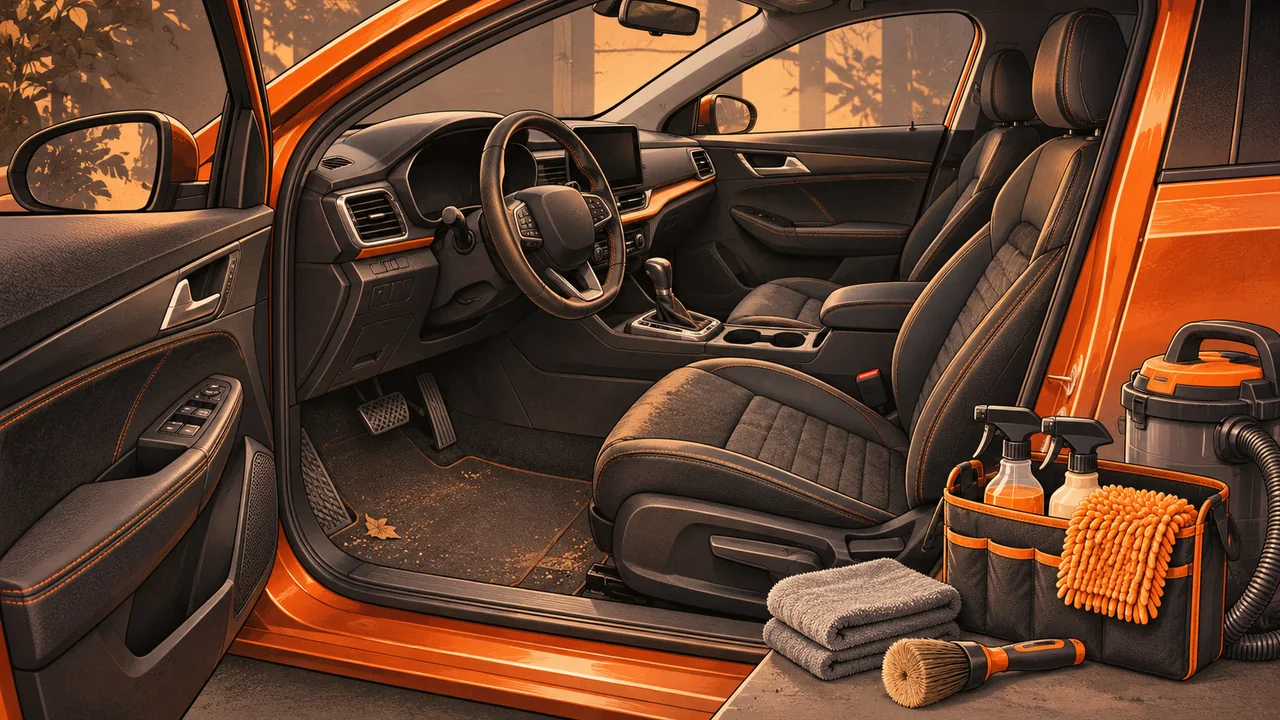
Maintenance cleaning suits a cabin with ordinary dust, loose debris and manageable surface soil. Deeper interior detailing addresses more accumulated soil and selected stains. Restoration begins when the issue involves damaged materials, a persistent source of odor, moisture beneath visible surfaces or contamination that needs a separate assessment.
The right service depends on the problem and the condition of the vehicle. A more expensive package is not automatically the right answer, and an ordinary interior detail should not be sold as a solution to every spill, leak or material defect.
What should an interior detail cover?
A useful scope identifies the areas being cleaned: seats, visible carpet, mats, dashboard, door panels, storage compartments, accessible crevices and interior glass. Cargo areas, third rows, headliners and extra mat sets should be discussed rather than assumed. The method for each area depends on its material and condition.
Ask whether the quote includes targeted stain treatment, embedded pet hair or additional cargo work. “Full interior” is a package label; the written area list explains what will actually be done.
You can compare the service context on Lava GR’s interior-detailing page. For your vehicle, confirm the included areas and any condition-based additions before work begins.
A practical way to choose the level of work
| What you are seeing | Useful starting conversation |
|---|---|
| Dust, crumbs and routine contact marks; no unusual odor or moisture | Maintenance cleaning and a repeatable care schedule. |
| Embedded hair, sand, visible spills or accumulated soil | A condition-based interior detail with the affected areas identified. |
| Recurring odor, dampness, visible suspect growth or a significant spill | A specialty assessment before choosing a standard package. |
| Peeling trim, worn color, torn fabric or damaged leather | Separate cleaning from repair or replacement options. |
These are booking distinctions, not contamination grades or medical conclusions. Several can apply to the same vehicle. A clean driver's seat does not rule out moisture beneath a rear floor mat.
Why every carpet does not need extraction
Loose dry soil and an absorbed liquid spill are different problems. Vacuums, suitable brushes and targeted cleaning can serve different roles from a wet extraction machine. The best method is the one that addresses the soil while respecting the material and leaving an appropriate drying plan.
Ford’s interior-care guidance cautions against soaking surfaces and sets separate restrictions for sensitive components. Always use the instructions for the particular vehicle; one manufacturer's example is not a universal recipe.
Ask why a wet process is proposed, which areas need it and how the shop will determine readiness for return. Equipment strength alone does not prove that every underlying layer is dry or that a persistent odor source has been removed.
When appearance and repair separate
Cleaning can reveal the material underneath the dirt. It cannot replace missing fibers, restore torn seams or put worn-off color back into trim. Dye transfer, surface soil and coating wear can initially look alike, so request a cautious evaluation instead of repeated aggressive scrubbing.
Likewise, a strong scent after service is not a verification method. If the concern is a returning odor, the estimate should identify the suspected source, the inspection needed and what follow-up would occur if the source remains uncertain.
What changes the estimate?
Size matters, but usable access and condition matter too. A small vehicle with tightly embedded pet hair can require more targeted effort than a larger vehicle with light soil. Third rows, cargo liners, concealed storage and multiple mat sets add areas that should appear in the scope.
Time in the shop also includes steps that are not continuous technician labor, such as drying or waiting for a specialist assessment. Ask about both the work and the expected return window. Avoid relying on a universal duration from an old blog or a vehicle-size label.
Prepare for the intake conversation
- Remove valuables and loose belongings so the condition can be seen.
- Photograph the whole cabin and close-ups of your main concerns.
- Describe spills, moisture, pet travel and previous treatments.
- List third rows, cargo areas, child seats and every extra mat set.
- State your priorities and any pickup deadline before choosing a service.
If you see dampness, suspect growth or evidence of a significant contamination event, tell the shop before transporting the vehicle. Review Lava GR’s specialty vehicle-assessment information rather than assuming an ordinary booking includes remediation.
For routine or accumulated interior soil, ask Lava GR to match the interior service to your vehicle. The goal is an understandable scope, suitable methods and realistic expectations about what can be cleaned and what needs another kind of repair.