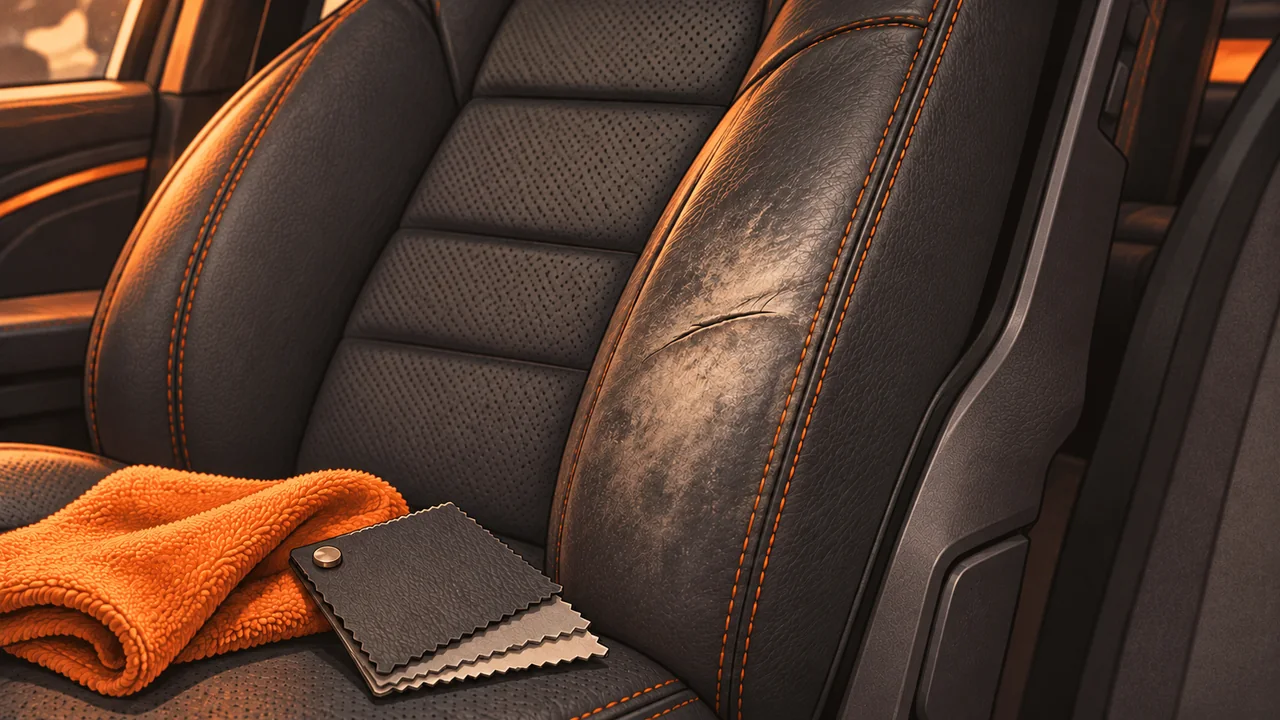
Cleaning removes appropriate soil from a material. Repair addresses damaged material or finish. If a seat has lost color, a trim coating is peeling or fabric is torn, more cleaning cannot replace what is missing. The first step is to identify whether the mark sits on the surface or reflects a change in the surface itself.
This distinction protects expectations as well as the interior. A sensible quote can include cleaning while clearly identifying areas that need an upholstery, trim or other repair specialist.
Several conditions can look alike
A dark seat bolster may carry body oils or transferred dye; a pale patch may be residue or worn finish. Shiny trim may be dirty, polished by use, damaged or covered in a previous dressing. A photograph provides useful context but may not settle which condition is present.
Tell the assessor how the area changed, how long it has looked that way and what products were used. If another repair or recoloring was performed, share that information before someone attempts a stronger clean.
Cleaning, recoloring and repair are separate interventions
COLOURLOCK’s automotive leather guidance distinguishes routine cleaning, color restoration and repairs for deeper damage. Those categories should also be separate in the conversation with your provider. The source does not establish that every material is repairable or that a given shop offers all three services.
| Observation | Question to ask |
|---|---|
| Surface soil or a recent mark | Can a compatible test establish how it responds to cleaning? |
| Persistent dye or discoloration | Is the original finish intact, and what are the limits of removal? |
| Missing color or worn coating | Does this need a cosmetic repair rather than more scrubbing? |
| Tears, splitting seams or peeling material | Should a repair specialist assess repairability or replacement? |
Identify the material before choosing chemistry
“Leather interior” can include several different surfaces. Synthetic upholstery, coated leather, textiles and plastic trim may sit beside each other. A product intended for one should not be assumed suitable for all of them.
Ford’s interior-care guidance gives distinct restrictions for leather and restraint-related components. The applicable instructions for your vehicle and any aftermarket materials should be checked before treatment. Do not transfer a leather-restoration procedure to seatbelts, an airbag seam or a child-restraint harness.
If a patch changes color or texture during a test, pause and reassess. Repeated aggressive cleaning can make the decision harder by adding new damage to the original condition.
Agree on the finish you actually need
A daily-use vehicle may need a clean, presentable interior with some honest wear left visible. A cosmetic restoration may aim for a closer color match, but appearance, texture and durability should be discussed with the repairer. Replacement introduces separate questions about part compatibility, availability and installation.
Ask to see the proposed result described in writing. “Improve the appearance of the driver’s bolster while retaining visible wear” is clearer than a promise to make an old seat new.
An illustrative handover decision
Imagine a driver brings in a seat with dark soil around the edges and a pale center patch. Cleaning improves the edges, but inspection shows the center finish is worn. A good completion report separates the cleaning accomplished from the remaining cosmetic repair need. It does not describe the worn patch as a stain the customer simply needs to pay to clean again.
That same separation prevents overlapping invoices. If a repair specialist will prepare and recolor the affected area, coordinate the scope rather than buying two unrelated treatments that both claim to resolve it.
Bring useful evidence
- One wide photograph showing the interior area.
- A close-up of the change in color, texture or stitching.
- The vehicle year, model and known material or repair information.
- The names of previous cleaners, protectants or dressings.
- Your priority: cleaning, practical cosmetic improvement or repair.
Request an interior assessment at Lava GR to identify the cleaning scope and any limitations. Review the current service options and ask which repairs require separate specialist coordination before authorizing additional work.
Sources and further reading
- Repairing colour damage to car leather — COLOURLOCK / Lederzentrum Switzerland.
- Vehicle Care: Cleaning the Interior — Ford.