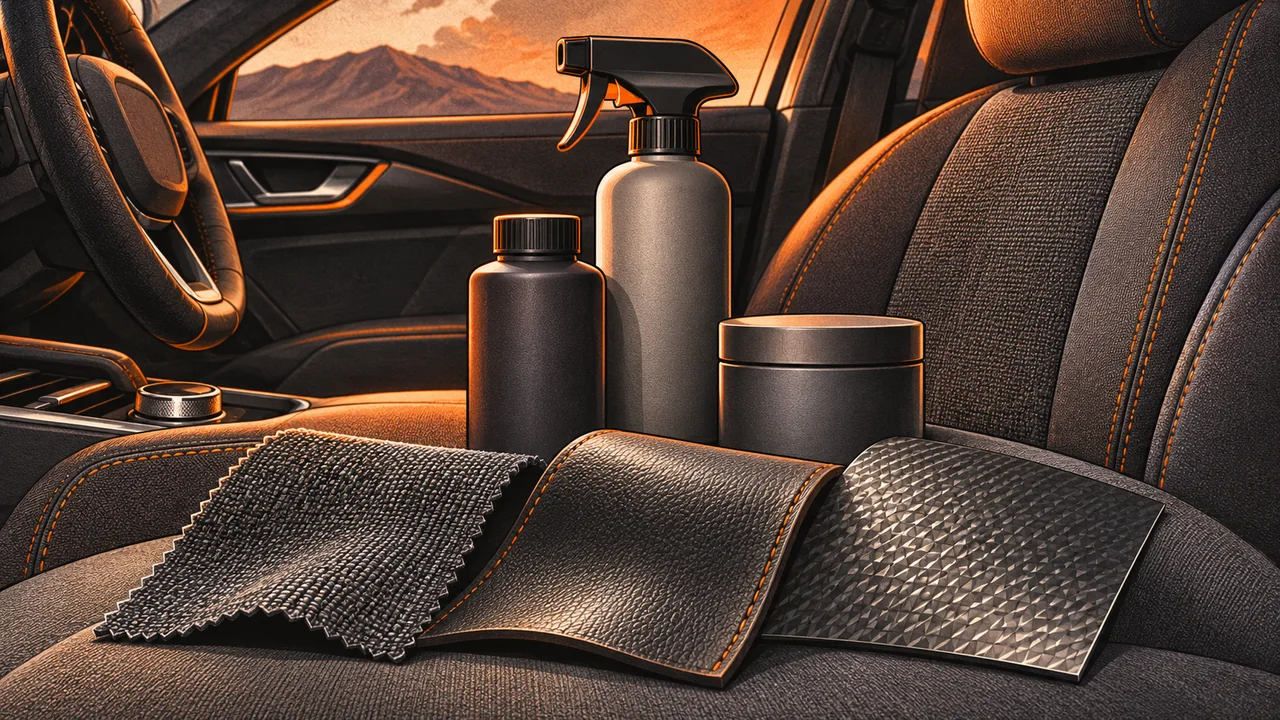
Choose an interior protective treatment by the exact material and product instructions. Fabric, coated leather, synthetic upholstery, plastic and specialty suede-like materials are not interchangeable. “Interior ceramic” is a broad service label unless the estimate names what is being treated and with what.
Protection may make some future cleaning easier, but it does not repair wear or turn every seat into a sealed, spill-proof container. Decide what problem you want to reduce before adding a treatment.
Fabric protection works with a textile
A fabric protector is selected for compatible textile surfaces. Gtechniq’s I1 Smart Fabric instructions, for example, specify cleaning and thorough drying before treatment and set application conditions. Those requirements belong to that exact product; they should not be copied as a universal schedule for other products.
Ask whether the proposed treatment is suitable for your seat fabric, carpet or convertible-top material. A demonstration on an unfamiliar swatch does not establish compatibility with every fabric in your vehicle.
The IICRC’s consumer upholstery guidance explains that fabric protectants do not close the spaces in a fabric weave. A spill can still travel through seams or gaps. Prompt attention remains important even when droplets initially bead.
Leather and synthetic surfaces need their own decision
A seat that looks like leather may include several materials. Ask the technician to identify the surface before recommending a leather treatment. The cleaner, coating or protector must be compatible with the material and any existing finish.
Vehicle instructions can also be restrictive. Ford’s leather-care guidance lists product types to avoid on the covered vehicle’s leather. Use your own model’s manual rather than assuming that a product’s “automotive” label settles every compatibility question.
Worn color, peeling finishes and cracking require separate discussion. Applying protection over damage does not turn a cleaning visit into a repair, and a coating should not conceal the need for a qualified upholstery assessment.
Compare the scope surface by surface
| Area | Ask before treatment |
|---|---|
| Cloth seats and carpet | Is this specific textile compatible, and how will preparation and drying be confirmed? |
| Leather or leather-like seating | What is the actual material and finish, and does the product explicitly support it? |
| Dash, doors and trim | Which surfaces are included, and will appearance or feel change? |
| Controls, restraints and sensitive components | Which areas must be excluded under vehicle and product instructions? |
Do not assume a floor-mat treatment is appropriate for pedals or other contact surfaces. Similarly, child-restraint harnesses are not ordinary upholstery. Their manufacturers’ instructions govern any cleaning or treatment.
Preparation is part of the purchase
A protection quote should explain what cleaning is included. If the vehicle has food residue, a returning odor or persistent dampness, address that condition before discussing a protective finish. A repellent should not be used to seal over an unresolved spill.
Ask whether protection changes the return schedule. Drying and curing requirements differ by product, environment and surface. Arrange transport around the actual instructions instead of assuming every add-on can be completed immediately before pickup.
Ask how you will maintain it
- What product will be applied to each named surface?
- What cleaners and tools are compatible afterward?
- How soon may the area be used or cleaned?
- What normal wear should I expect on high-contact areas?
- What does any written warranty cover, and what does it exclude?
Avoid judging all performance from one beading demonstration. Keep the care instructions and report changes in appearance, feel or cleanability. Never assume an interior treatment provides a health benefit or replaces contamination remediation.
Make the add-on fit your use
For a frequently used family vehicle, the useful comparison is the cost of the treatment and its care requirements against the materials and spill patterns you actually have. You may choose selected seating surfaces rather than a vaguely defined whole-cabin package.
Ask Lava GR about material-appropriate options when arranging interior detailing. If the cabin also has a significant spill or recurring moisture, start with a specialty assessment. Confirm current treatment availability in your written estimate.
Sources and further reading
- Smart Fabric I1 V3 — Gtechniq.
- Consumer Floor and Furnishings Care Information: Upholstery — IICRC.
- Vehicle Care: Cleaning the Interior — Ford.