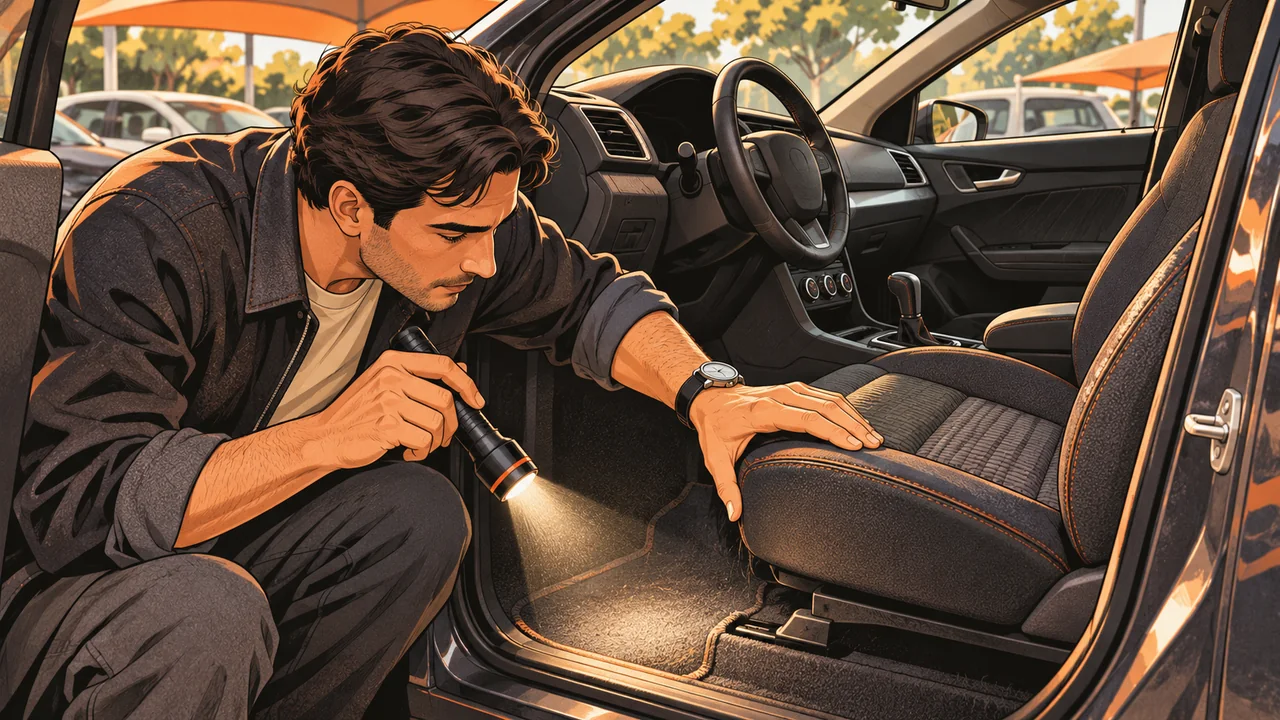
A clean used-car interior shows how it looks at the time of viewing. It does not establish that the vehicle has no leak, flood history, electrical problem or hidden repair. Treat detailing, vehicle-history information and an independent mechanical inspection as different sources of information.
You do not need to become a technician to ask useful questions. Record what you can see, note what you cannot inspect and arrange professional assessment before relying on appearance alone.
Look at consistency, not just shine
Compare the seats, steering wheel, pedals, carpet and cargo area. Uneven wear or replaced material can have an ordinary explanation, but it is worth asking about. A recently replaced carpet might follow wear, a spill or another repair; the replacement itself does not prove which.
Ask for the reason and any available record. Keep observations separate from conclusions: “the rear carpet appears newer than the front” is a useful note. “This car was flooded” is not established by that observation alone.
Check for moisture clues with permission
Look at accessible carpet edges, removable mats and cargo storage. Note dampness, tide-like marks, unusual residue or a musty odor. Do not pull fixed trim or dismantle the interior during a viewing. Ask the seller to allow the independent inspector access appropriate to the inspection.
The US Department of Justice’s NMVTIS flood-damage advisory warns that flooded vehicles can be cleaned and resold while electrical or safety-system damage remains. It recommends an independent inspection and explains that title-history information does not include every repair or maintenance event.
A pleasant fragrance does not rule out a problem. An unpleasant smell does not identify its source. Ask when the cabin was last cleaned and why, then let the inspector investigate any concern.
Separate cleaning needs from damaged material
Some marks may respond to a compatible clean; others may be worn-off color, peeling trim, a damaged coating or a tear. Avoid valuing every blemish as either a trivial stain or an expensive replacement without assessment.
COLOURLOCK’s leather-care information distinguishes cleaning from color restoration and repair. That distinction is useful when viewing a seat bolster: more scrubbing will not replace a missing finish or stitch a torn seam.
Photograph the concern with the seller’s permission and ask what kind of repair would be needed. A detailer can help assess cosmetic work, while structural, mechanical and safety concerns belong with the relevant qualified repairer.
Use a short viewing record
- Visible condition: where are the marks, wear or replaced-looking materials?
- Odor: what do you notice, and under what conditions?
- Moisture: are any accessible areas damp or visibly marked?
- Seller’s explanation: what event or repair is described?
- Evidence: what invoices, history records or inspections are available?
- Open questions: what must the independent inspector evaluate?
Keep the record private. There is no need to post the seller’s identity, plate or documents online to obtain a useful professional opinion.
What a clean history report cannot settle
Review a legitimate title-history report and ask the inspector to assess the actual vehicle. A report and a physical inspection answer different questions. Do not assume one substitutes for the other or that a missing entry proves an event never happened.
Likewise, a recent detail invoice is not a roadworthiness certificate. It may help explain the cleaning performed, but it should not be read as clearance for systems outside that provider’s scope.
Plan cosmetic work after the important questions
If the car passes the assessments you require, separate immediate repairs from optional appearance work. Ask for a condition-based detail quote that lists cleanable areas and identifies any cosmetic limitations. This makes it easier to decide what improvement is worth pursuing.
For help with interior appearance, request a Lava GR interior assessment. If inspection reveals a spill, recurring moisture or contamination concern, discuss specialty assessment options before scheduling an ordinary detail. Neither service replaces an independent inspection of the vehicle’s mechanical and safety systems.
Sources and further reading
- Buyer Beware: Safety Hazards of Flood-Damaged Vehicles — US Department of Justice / NMVTIS.
- Repairing colour damage to car leather — COLOURLOCK / Lederzentrum Switzerland.