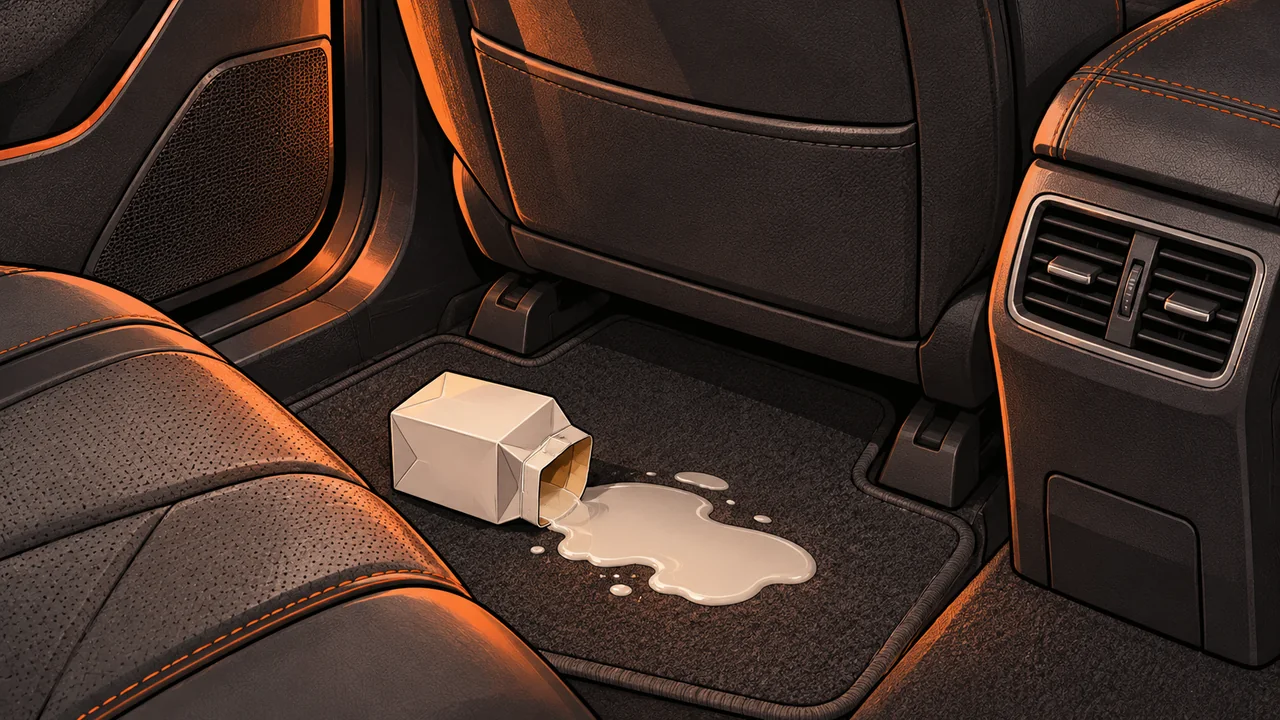
To address milk smell in a car, the affected residue needs to be found and appropriately removed from the materials it reached. Cleaning the visible stain alone may leave part of the spill below the surface. If the odor persists or the spill was substantial, arrange an assessment rather than repeatedly adding fragrance or cleaner.
For a fresh, ordinary spill on an accessible surface, stop the source and gently blot visible liquid with an absorbent cloth without spreading it. Follow the vehicle and material instructions. Do not flood the area with water, mix products or dismantle the seat to reach deeper layers.
Why milk is a different problem from dry crumbs
BISSELL’s discussion of milk residues identifies fats, proteins and sugars as components of the spill. That mixed residue explains why a visible mark and an odor need to be assessed together rather than treated as unrelated cosmetic problems.
The IICRC’s vehicle-upholstery guidance also notes that liquid spills can penetrate fabric and affect cushioning or material beneath it. The visible size of the mark therefore does not reliably establish the full affected area.
These principles do not establish a fixed time after which every spill needs carpet replacement. The material, quantity, path of the liquid and condition found during inspection determine the next step.
The six details to tell the shop
- What spilled: milk, a milk-based drink or another product; identify it as accurately as you can.
- When it happened: include how long the vehicle sat before the spill was discovered.
- Approximate amount: a few drops, part of a cup or a larger container; say when the amount is uncertain.
- Starting location: seat, footwell, cargo area or a removable mat.
- Where it may have traveled: seams, the edge of a mat, an adjacent footwell or another visible route.
- What has already been done: blotting, extraction, product names, fragrance or another service.
Photographs of the original spill are useful even if the surface now looks clean. Include one wide image and a closer view; do not stage a cleaner-looking version for the quote.
Why a smell may return
The first cleaning may improve the accessible area without reaching every affected material. A removable item may also carry residue back into the cabin. The assessment should revisit the event and the area treated rather than assume a stronger version of the same process is enough.
Tell the shop whether the odor changes after the vehicle sits or after normal use. That observation can guide the inspection, but it does not establish the depth of contamination or a health conclusion.
What a restoration assessment may decide
The assessor may recommend targeted cleaning, evaluation beneath an accessible covering, specialist access to affected material or replacement where cleaning is not appropriate. Ask what evidence supports each recommendation and what will be checked before reassembly or return.
Seat removal and work near restraints, wiring or electronics require the applicable vehicle procedures. A milk-spill article is not an instruction to unbolt a seat, disconnect an airbag system or inject an unknown chemical into cushioning.
Permanent staining or material change may remain even after appropriate cleaning. The estimate should distinguish improving appearance from resolving the identified spill residue, and it should state any uncertainty instead of guaranteeing an outcome.
Keep the quote clear
Ask which areas are included, whether drying affects the return schedule and how further findings will be approved. If additional materials become accessible during inspection, request photographs and an updated explanation before authorizing more work.
Keep the initial report and the completion notes. If the concern returns, those records make the follow-up more specific. A routine detailing receipt, a pleasant smell and a clean photograph each provide limited information; none alone proves that every affected layer was evaluated.
Choose an assessment that matches the spill
A small, promptly addressed surface spill may fit an interior-detailing assessment. A persistent milk odor or a larger spill belongs in the conversation about Lava GR’s specialty vehicle assessments. Share the event history before choosing a package so the proposed work addresses the actual condition.