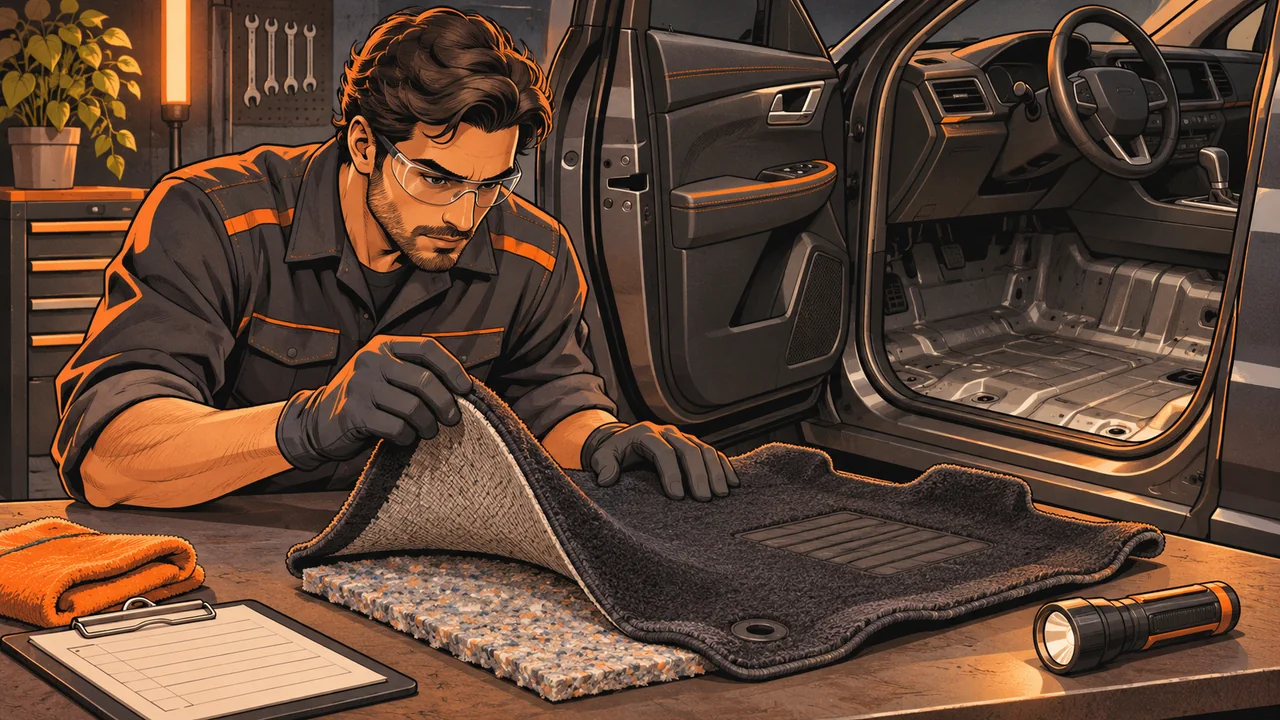
Vehicle carpet may need professional access when the concern extends beneath the visible fibers. Persistent moisture, an unresolved spill pathway or contamination in inaccessible layers can make surface cleaning an incomplete approach. Removal is not automatically necessary for every stain, and lifting carpet does not automatically mean replacing it.
The important question is what the technician needs to reach or evaluate. Ask for the finding that supports the proposed access, the components involved and the decision that inspection will help make.
Separate three different scopes
| Scope | What it can address | What it does not establish by itself |
|---|---|---|
| Surface cleaning | Accessible soil and a suitable cleaning response on the face of the carpet | Condition beneath the carpet or a repaired leak |
| Professional access inspection | Evidence from areas that were previously inaccessible | That all materials can be reused or the complete job price is already known |
| Material replacement | A component identified for removal from the vehicle and replacement | Correction of water entry, wiring faults or every remaining odor source |
A reasonable proposal may begin with a defined inspection rather than a promise of a full restoration result. That inspection should have its own boundaries and authorization before further work begins.
Look for evidence, not just a dramatic odor
Tell the assessor whether the area becomes wet again, how long the issue has been present, whether liquid reached more than one footwell and what cleaning has already been attempted. A technician may document visible moisture, accessible material condition and whether further access is needed. A dry-feeling surface or improved smell does not answer all of those questions.
EPA’s residential mold guidance recognizes that mold-affected porous materials can be difficult to clean completely and may require disposal. That is a general material principle, not a vehicle-specific replacement rule. The actual vehicle construction, contamination, manufacturer guidance and inspection findings still govern the proposal.
Ask what will happen to each material
“Replace the carpet” is a broad phrase. Request a list identifying the carpet assembly, any separate backing or insulation, trim, fasteners and other components actually included. Some items may be integrated, while others may be separately supplied. Do not assume a quote includes both without checking the parts description.
For materials proposed for reuse, ask what condition the technician expects to achieve and how it will be assessed. For replacement, ask how fit and compatibility will be verified. A photograph of the top surface is useful documentation, but it cannot replace evaluation of parts that have not been exposed.
Vehicle access is not a household carpet job
Seats, restraint-related components, wiring and interior attachments may be involved in gaining access. Their handling and reassembly require the applicable manufacturer procedures and appropriately qualified personnel. Do not unbolt seats or disconnect components to prepare for an estimate. Send available photographs and let the assessor specify the access needed.
Flooding also introduces questions beyond interior appearance. NHTSA advises a thorough assessment before starting a flooded vehicle because damage can be hidden. Cleaning is not a substitute for that assessment. Tell the shop about flood exposure or electrical concerns before arranging transport.
Resolve the source before judging the result
Illustrative example: a vehicle has a repeatedly wet passenger footwell. Replacing affected interior material while the entry path remains unresolved risks returning the same area to a wet condition. A useful plan identifies who will diagnose and repair the source, when restoration can proceed and what confirmation will be available.
This may require separate work by a glass specialist, body shop or mechanical technician. Ask which business owns each step. An interior restoration estimate should not imply that it includes an unrelated repair merely because both concerns involve water.
Questions for a clear estimate
- What observed condition makes further access necessary?
- What access, parts and reassembly are included?
- Which decisions remain provisional until inspection?
- Who approves additional work, and how will changes be documented?
- What completion evidence will be supplied for materials, source repairs and reassembly?
If the concern is ordinary accessible soil, start with interior detailing options. For recurring moisture or a spill affecting hidden areas, request a vehicle water-intrusion assessment and describe the history before selecting a cleaning package.