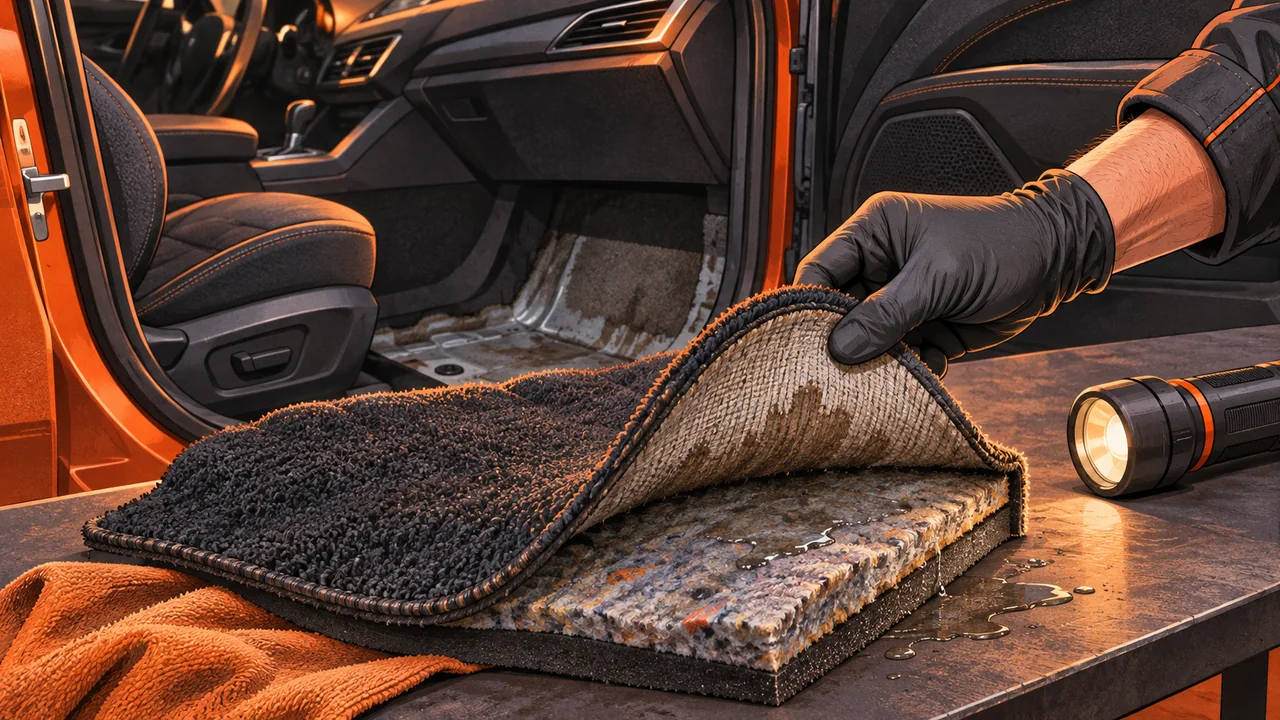
A dry-feeling carpet surface does not establish that the backing, cushioning or other material beneath it is dry. After a leak or substantial spill, the useful question is where the liquid traveled and whether the affected assembly has been assessed beyond the visible surface.
That does not mean every wet mat requires dismantling the interior. It means the level of assessment should match the event, the vehicle construction and the signs that remain.
Why the upper surface tells only part of the story
Vehicle floor coverings and seating can contain different materials in layers. Their construction varies by model. Liquid on the visible fabric may have reached something underneath even when the top later looks normal.
The IICRC’s vehicle-upholstery guidance notes that liquid spills can penetrate fabric into cushioning and underlying materials. This is a reason to investigate the affected area, not proof that every vehicle has the same padding or that every spill requires replacement.
Pressing your hand on the carpet samples one place at one moment. A photograph has the same limitation: it can record a mark but cannot establish the condition of every concealed layer.
Give the assessor the event history
- What liquid entered the cabin, if known?
- Where did you first notice it, and when?
- Did it follow rain, washing, air-conditioning use or a spill?
- Which areas were wet, including areas that now feel dry?
- What cleaning, drying or repairs have already been attempted?
Use “unknown” where you do not know. A reliable account is more helpful than guessing a cause. Keep photographs taken at the time of discovery, because the visible extent may change before an appointment.
What a useful drying assessment should explain
Ask which areas were inspected, what could be accessed, and how the assessor evaluated remaining moisture. Where an instrument is used, ask what material and location the reading represents. A number without context should not be treated as a universal pass/fail certificate.
The assessment may recommend further access, more drying, source repair, cleaning or replacement of particular material. Ask why the recommendation applies to the findings and what will be checked afterward. Any removal involving seats, wiring or restraint components requires appropriate vehicle procedures.
Drying and stopping the leak are separate tasks
If water is still entering, an apparently successful drying period can be followed by another wet floor. The repairer and interior-restoration provider need a clear handoff: what source was identified, what was repaired, and how that repair was evaluated.
EPA’s moisture-control guidance emphasizes prompt drying and controlling the water source. It concerns buildings, so its principles do not provide a vehicle-specific drying time or a clearance standard for your car. Avoid turning a general target into a promise that one or two days will resolve every affected assembly.
Reasons to pause a routine interior booking
Recurring dampness, an unusual odor, visible suspect growth, standing water or warning lights deserve disclosure before a standard detail. Floodwater or an uncertain liquid source also changes the problem. A detailing appointment alone cannot determine mechanical or electrical roadworthiness.
Do not run heaters, improvise chemical treatments or remove safety-related components to make the cabin appear ready. Ask the relevant professional how the vehicle should be handled and whether transport needs to be arranged.
What to keep at completion
Request a concise record of the affected areas, the work performed, parts replaced if any, the assessment used before reassembly and any outstanding limitation. Keep the source-repair record with it. This makes a future recurrence easier to investigate without assuming the same cause.
Use the record to answer practical questions: Was the leak fixed? Which materials were accessed? Was the return condition evaluated after the cleaning process? What signs should prompt another call? A fragrance or a tidy photograph does not answer those questions.
If your vehicle has a dry-looking carpet but a moisture history that remains unresolved, request a water-intrusion assessment with Lava GR. For ordinary surface soil without that history, review interior detailing and describe the condition so the service can be matched appropriately.