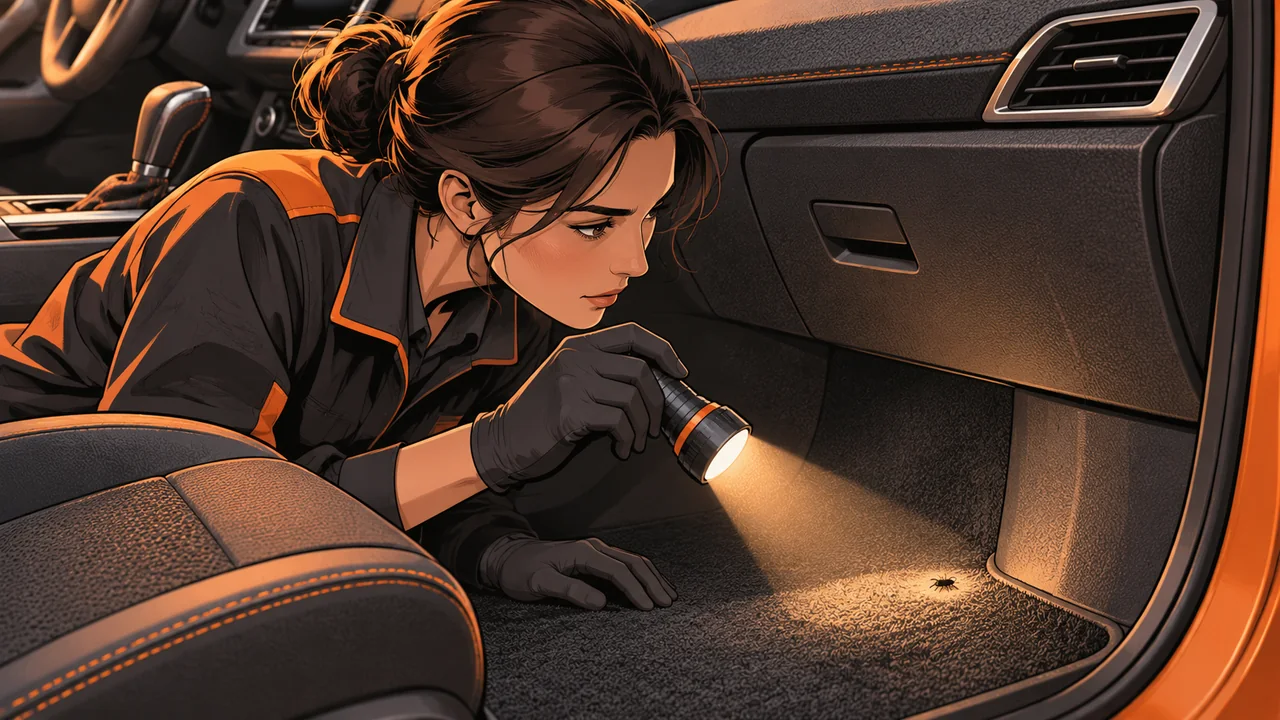
Tell the shop about insect activity before booking a routine detail. Describe what you saw, where you saw it and whether it has happened more than once. A clean-looking cabin does not establish pest control, and one sighting alone does not tell you the species, extent or appropriate treatment.
The productive sequence is identification, assessment, an agreed treatment-and-cleaning plan when needed, and follow-up. Cleaning and pest management have different jobs in that sequence.
Record observations without guessing the infestation
A useful first message can be simple: “I saw an insect near the rear seat yesterday and another near the cargo area today. I have a clear photograph. No treatment has been applied.” That is more actionable than an unverified species name or a promise that it is only one bug.
- Photograph a visible insect from a safe position if possible.
- Record the date, approximate time and location inside the vehicle.
- Describe whether the vehicle was parked, recently used or carrying luggage or goods.
- List sightings or evidence in other relevant items or locations.
- Disclose any sprays, powders, foggers or other products already used, including the actual product name.
Do not dismantle trim or disturb suspected hiding places to collect better pictures. Let a qualified pest professional determine whether more inspection is needed and how to obtain it.
What cleaning contributes
An agreed cleaning scope may remove accessible debris and residues, improve visibility for inspection and address the vehicle’s general interior condition. Which work should happen first depends on the pest professional’s plan. Cleaning at the wrong point could interfere with monitoring or with a treatment that has specific follow-up instructions.
Ask the detailer to describe the actual deliverable: for example, cleaning of accessible carpet and seating surfaces after a pest professional has provided instructions. That is clearer than a blanket “bug removal” promise.
What belongs with a pest professional
Species identification, infestation assessment and treatment selection require appropriate expertise. EPA’s integrated pest management guidance for bed bugs describes a coordinated approach using relevant methods and monitoring. It is a useful planning principle, but its building examples should not be copied into a vehicle treatment recipe.
The professional must evaluate whether a product or method is appropriate for the particular vehicle and materials. EPA explains that pesticide labels specify permitted uses and precautions. A product sold for a room or a household surface should not be assumed appropriate for a passenger cabin.
Do not improvise pesticide fogging, mix products or attempt to turn a parked car into a heat-treatment chamber. Ask for the permitted treatment site, required restrictions and the conditions for cleaning and return to use. A social-media demonstration is not a substitute for those instructions.
Decide who coordinates each step
| Question | Who should answer it? |
|---|---|
| What pest has been identified and what further inspection is needed? | The qualified pest professional |
| Which belongings should be moved, treated or left alone? | The pest professional, coordinated with the owner |
| What cleaning is included and when should it occur? | The detailer and pest professional together |
| What monitoring or follow-up is required? | The pest professional |
| Who can approve additional vehicle work? | The owner or authorized decision-maker |
Illustrative scenario: a vehicle is scheduled for carpet cleaning, but the owner reports new insect activity just before drop-off. The useful response is to revise the intake and coordinate assessment. Proceeding as if the booking were unchanged would leave the central concern undefined.
Agree on the limits before work starts
A detail should not be represented as a guarantee that no insects or eggs remain. Ask what evidence will support the pest professional’s evaluation and what to do if another sighting occurs. Preserve the relevant instructions and dates so everyone is discussing the same sequence of events.
Start with Lava GR’s specialty contamination assessment information and disclose the activity before bringing the vehicle in. Once the assessment defines an appropriate cleaning scope, interior detailing services can be discussed as part of that plan.