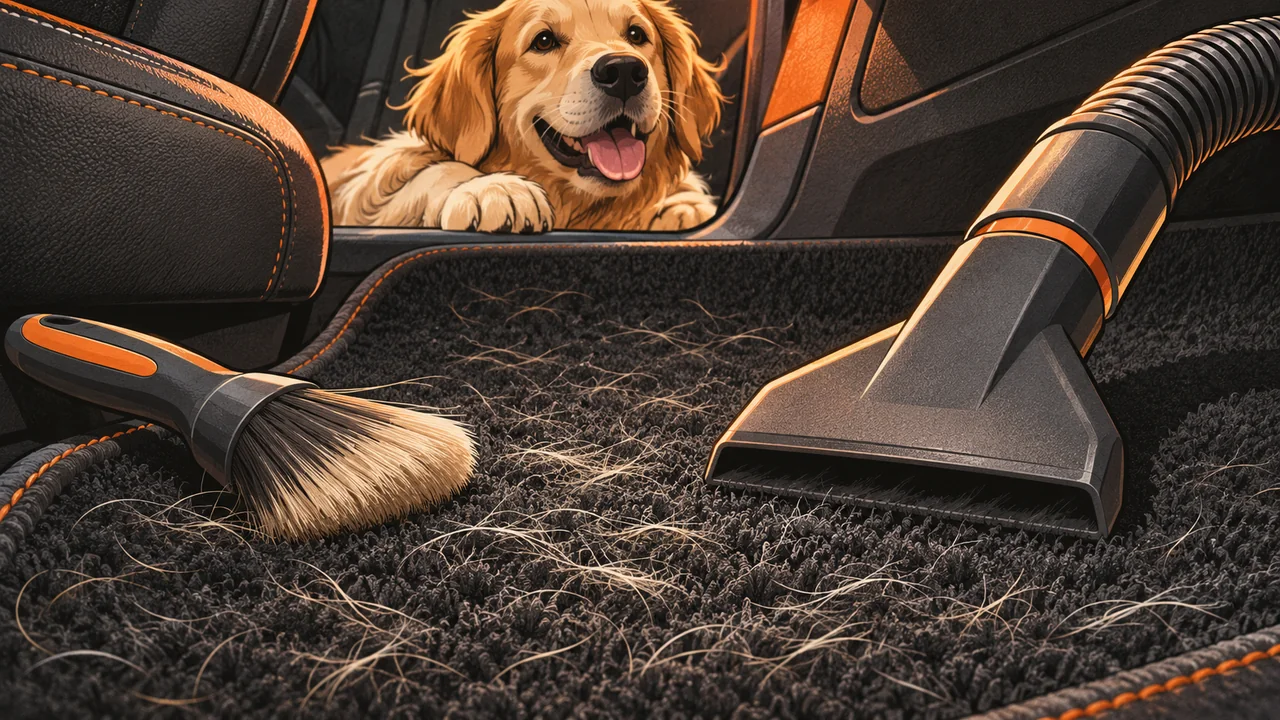
Embedded pet hair can take longer to remove because it must be released from the material before a vacuum can collect it. The amount of hair matters, but so do the fabric, its distribution and access around seams and seat bases. A vehicle-size category alone cannot describe that work.
When asking for a quote, show where the hair is embedded and explain where your pet usually rides. That helps the shop distinguish a few visible hairs from a cabin-wide removal project.
Visible hair is only part of the scope
Start with the pet's usual place: a seat, cargo bed or footwell. Then look at adjacent seatbacks, carpet edges and the space beneath loose belongings. Hair may be concentrated in one removable cover, or spread through several materials that respond differently to the same tool.
A broad photo of a cargo area can make the problem look smaller than it is. Add a close-up taken from a low angle so embedded hairs can be seen. Do not use filters or photograph only a freshly brushed patch.
Why the same tool does not fit every surface
Rubber tools, brushes and vacuum attachments serve different purposes. BISSELL’s pet-hair brush guidance distinguishes its soft-bristle use on delicate surfaces from rubber features used for embedded hair. The general lesson is to match the tool to the material, not to scrape every seat with the most aggressive edge available.
Loose knit fabric, delicate upholstery, stitching and worn carpet deserve caution. A tool that releases hair from a robust cargo mat can distort a more sensitive surface. A small test and repeated collection are more informative than promising a fixed result from a particular gadget.
Scraping harder after the material begins to change is not better cleaning. The condition of the fabric sets a practical limit, and the shop should explain when chasing the last few hairs could damage it.
Agree on areas and priorities
- Seats: identify which rows, seatbacks and seams are affected.
- Floor: include footwells, mat edges and accessible spaces beside seats.
- Cargo: specify the load floor, side fabric, seatbacks and separate liners.
- Loose covers: say whether they will be removed, cleaned separately or brought with the vehicle.
- Extra concerns: disclose urine, vomit, persistent moisture or a strong returning odor separately from hair.
A pet-hair addition is not automatically an odor-remediation service. If there has been a significant accident or contamination, the shop needs that history before deciding whether the ordinary interior scope is appropriate.
An illustrative quote comparison
Consider two similar SUVs. One carries a dog on a removable cover, and most visible hair is on that cover. The other carries a dog directly on fabric throughout the rear seats and cargo area. Both are the same vehicle size, but the second request includes more affected surfaces and more seam work.
That does not justify an unexplained charge. A useful quote identifies the affected areas and states how additional findings will be approved. If photographs leave the amount uncertain, ask for an inspection before a final commitment.
What a realistic finish looks like
Set the goal around the vehicle's intended use. You may want substantial improvement for daily family travel, or a more detailed presentation before a sale. Explain the priority without expecting a promise of zero remaining hairs in every inaccessible cavity.
At pickup, check the agreed areas under ordinary light. If a specific section was excluded because access required disassembly, that should be documented. Seat removal is a separate decision involving vehicle-specific procedures, not a casual extension of vacuuming.
Make the next clean easier
Use a suitable removable pet-travel cover where it does not interfere with restraints, airbags or vehicle operation. Empty loose debris regularly and clean the cover according to its instructions. Choose a routine you can maintain rather than waiting until the entire cabin needs another concentrated removal session.
For your next visit, send Lava GR photos of the affected seating and cargo areas and ask about interior detailing with pet-hair removal. If odor or a pet accident is the main issue, explain it when requesting a specialty assessment so the work is scoped around the actual problem.