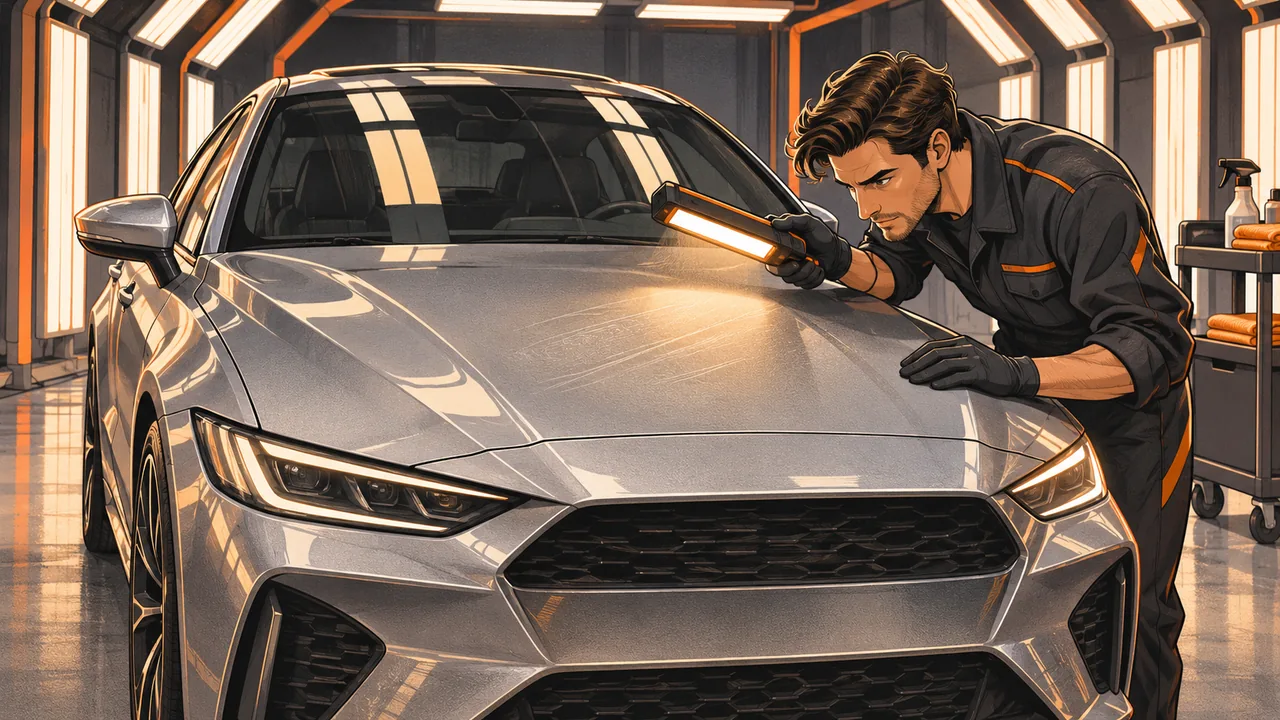
Yes—a new vehicle should be inspected before a coating is chosen and applied. Inspection answers what preparation is appropriate; it does not mean every new vehicle needs heavy correction. The decision should follow the condition of the finish, its history and your appearance goals.
“New” describes the purchase, not a complete assessment of every painted panel, trim piece or protective film. A walkaround gives you and the installer a better starting point than an assumption that the finish is either perfect or badly damaged.
Keep delivery concerns separate from detailing decisions
If you notice a chip, scratch, paint inconsistency or damaged trim at delivery, photograph it clearly and raise it with the seller before authorizing cosmetic work that could alter the evidence. Record the location and what is visible rather than guessing at the cause.
A detailer can assess suitable cosmetic work, but a coating appointment should not silently become the resolution of a disputed delivery issue. Clarify who is responsible for any repair decision and keep the relevant written records.
Ask about the vehicle's actual finish
Tell the installer whether the vehicle has matte or satin paint, added film, decals, protective treatments or known bodywork. Ask about any preparation or protection the seller already applied. If information is missing, mark it as uncertain rather than inventing a history.
Different surface types can have different compatibility requirements. A coating selected for glossy painted panels should not automatically be applied to every neighboring material. The proposed scope should name the surfaces included.
Inspect after appropriate cleaning
Surface soil and reflections can hide or mimic defects. A suitable clean-and-inspect process helps the installer distinguish contamination from marks in the finish. Review the vehicle under practical inspection lighting and ask to see the areas that drive the recommendation.
- Are there isolated marks or a broad pattern of marring?
- Does a concern appear to be on the surface or within the finish?
- Are any panels or trim areas uncertain because of repair history?
- What can reasonably be improved, and what should be left or referred?
This is a checklist for discussion, not a remote diagnosis. Photos alone may be insufficient to decide whether a mark can be removed.
Choose correction by need
A vehicle with a satisfactory finish may need less appearance correction than one with visible haze. The coating's own preparation requirements still apply. Ask the installer to distinguish those requirements from optional work intended to reach a higher cosmetic standard.
Manufacturer instructions support this product-specific approach. Gtechniq's Crystal Serum Light directions describe polishing when required and give separate preparation instructions. This example does not establish a universal process or identify Lava GR's proposed product.
For a deeper understanding of the appearance decision, see Lava GR's paint-correction information. Ask for a test-based explanation of the proposed result, not a guaranteed percentage of scratch removal.
Get a complete written scope
Confirm the chosen product, treated surfaces, preparation, accepted remaining defects and any warranty terms. Glass, wheel faces, trim and painted panels may be separate treatments. A general phrase such as “whole-car coating” is worth clarifying before work begins.
Also ask how newly repaired paint would affect the plan if a delivery concern needs bodywork first. The repairer and applicable product instructions should inform timing; a general blog should not impose a universal waiting period.
Build the maintenance habit from the start
Before pickup, ask when washing can begin and which methods and products fit the installed coating. Decide how you will clean the vehicle during busy weeks and winter weather. A coating works within an ownership routine; it does not remove the need for one.
Keep the condition record and installation details together. They are useful if you later need a repair, a maintenance assessment or clarification about which surfaces were treated.
Request a ceramic-coating assessment from Lava GR with the vehicle's model, delivery timing and any known finish history. Ask for the preparation your actual vehicle needs and a clear account of what the coating can and cannot change.