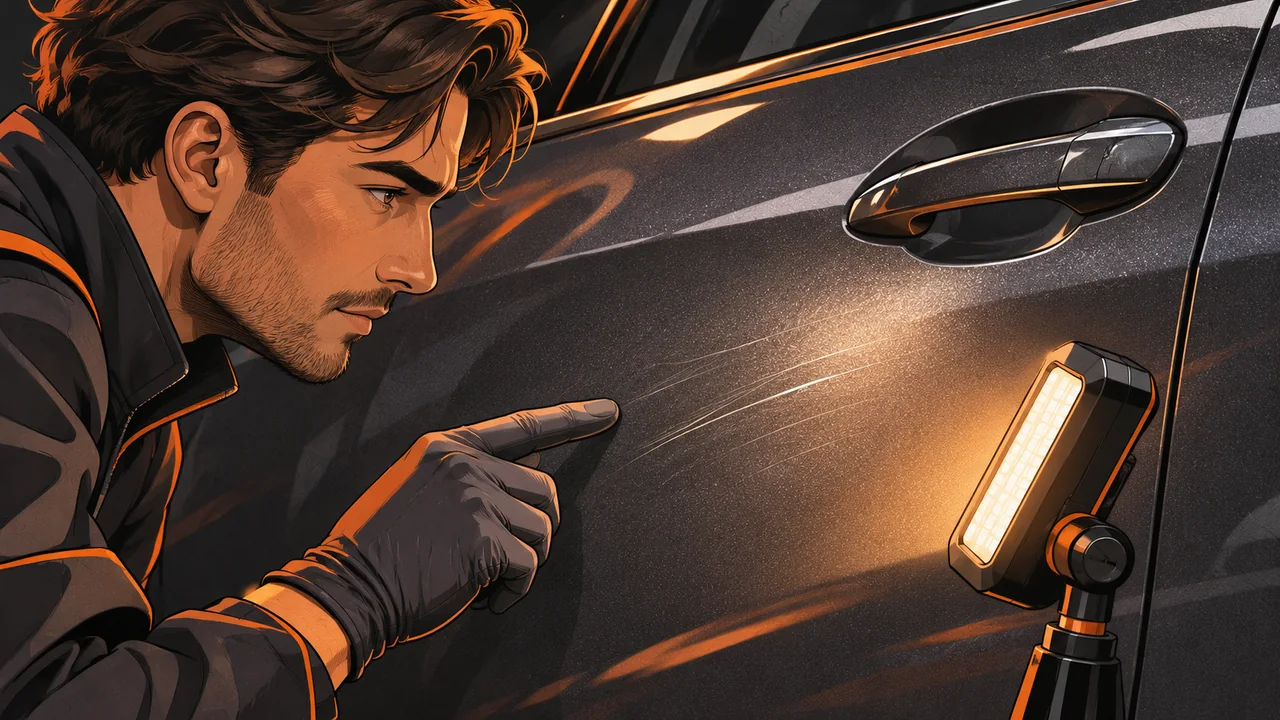
A light defect within the outer paint finish may respond to polishing. A scratch that has removed color or exposed an underlying layer needs a different repair. The useful question is how much intact finish remains, not how powerful a polisher is.
Photos help explain your concern, but they cannot reliably establish scratch depth or the remaining paint around it. Before buying a correction package, ask for an inspection and a realistic goal: reduce visibility, repair a chip, or refinish a panel.
Three different problems can look like a scratch
A transferred mark may sit on top of your finish. A shallow scratch changes the surface itself. A deep scratch removes more of the coating system. These situations can look surprisingly similar in a phone photo, especially when the panel is dirty or the light hides its edges.
3M’s scratch-removal guidance distinguishes light defects in clear coat from deeper damage that may need repainting. This supports an inspection-first decision; it does not mean every mark within clear coat can be fully removed without compromising the finish.
- A mark on the surface: cleaning and a careful test may show that some visible damage was transferred material.
- A shallow surface defect: an appropriate correction test may reduce its appearance.
- Missing color, exposed substrate, peeling or cracking: seek a repair assessment before polishing around the problem.
Why the fingernail test is not a final answer
A scratch that catches a nail deserves caution, but a nail cannot measure the coating system or identify a previous repaint. Pressing harder provides no useful certainty. Likewise, a mark that looks better when wet has not demonstrated that it can be removed permanently.
The technician needs to consider the entire area: panel edges, body lines, previous repairs, surrounding defects and your expectations. A paint-thickness reading can add context where the instrument and substrate permit, but a single number is not permission to keep polishing. DeFelsko explains that magnetic and eddy-current gauges measure the coating stack, not isolated clear coat.
Choose the outcome before the procedure
Polishing aims to refine the existing finish. It does not put missing paint back. A conservative improvement can be the right decision when pursuing a disappearing scratch would require too much material removal.
Touch-up places compatible color or repair material in a localized damaged area. Discuss whether your priority is reducing contrast, covering exposed material or achieving a close cosmetic match. A small repair may remain visible from some angles.
Body-shop refinishing may be the appropriate path for deeper or broader damage. The repairer should assess the paint system, preparation, color match and any underlying body damage. Ask what parts of the panel require work and what finish limitations to expect.
An illustrative example: a parking-lot door mark
Imagine a dark door with a pale streak. After appropriate cleaning, most of the streak disappears, leaving one narrow line. The owner may be happy with a modest correction of the remaining line. Another owner may need a body-shop estimate because the line includes missing color. The original photo and location were similar; the findings and desired finish changed the decision.
That is why “scratch removal included” needs a defined scope. Ask the shop to identify which marks are expected to improve, which will remain, and whether a test result changes the quote.
What to send before an assessment
- A full-panel photo that shows where the damage sits.
- A close photo in diffuse light and another from an angle.
- The vehicle year, model, paint finish and any known repaint or protective film.
- When the mark appeared and what has already been applied to it.
- Your priority: practical improvement, preservation, or the closest possible cosmetic repair.
Do not sand, use a solvent mixture or add an unfamiliar compound just to make the photo look better. Explain prior attempts honestly; that information helps the next professional avoid repeating an unsuccessful process.
Get a useful recommendation
Review Lava GR’s paint-correction service and request an assessment of the specific marks that concern you. If protection is also on your list, discuss the repair decision before choosing a ceramic-coating service. A coating should not be used to promise that existing scratches will disappear.