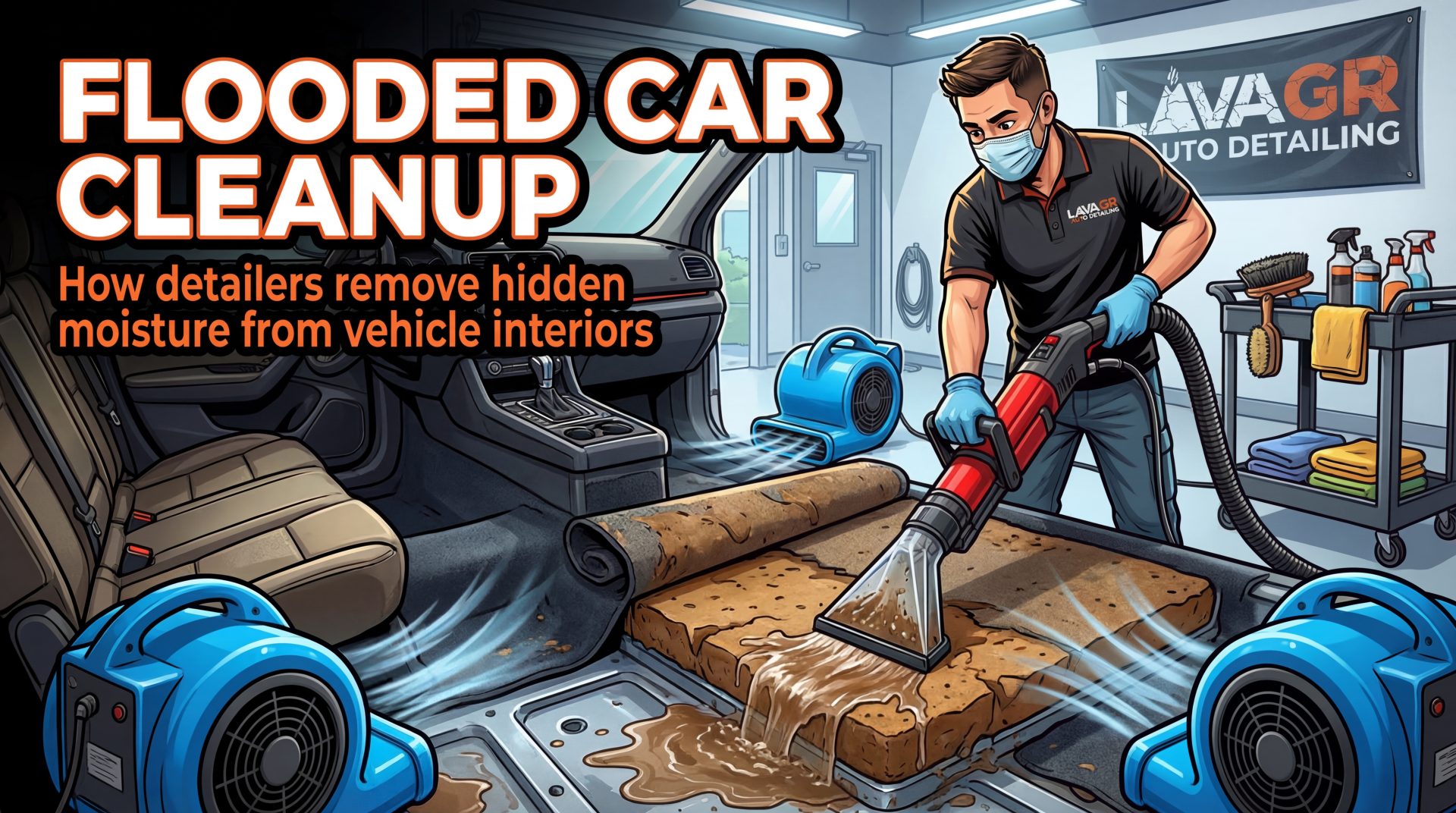
Flooding can happen fast in West Michigan. Heavy rain, backed up storm drains, flooded parking lots, or rising water near the Grand River can quickly turn a normal day into a nightmare for vehicle owners. When a car takes on water, the damage is rarely limited to what you can see.
At Lava GR Auto Detailing in Grand Rapids, we regularly deal with vehicles that have been flooded or saturated with water. What most people don’t realize is that the real problem is not the wet carpet you see on the surface. The real problem is what happens underneath it.
If your vehicle has been flooded, time matters. Acting quickly can be the difference between restoring the vehicle and having it declared a total loss.
Why Flooded Vehicles Are So Difficult to Fix
Vehicle interiors are built in layers.
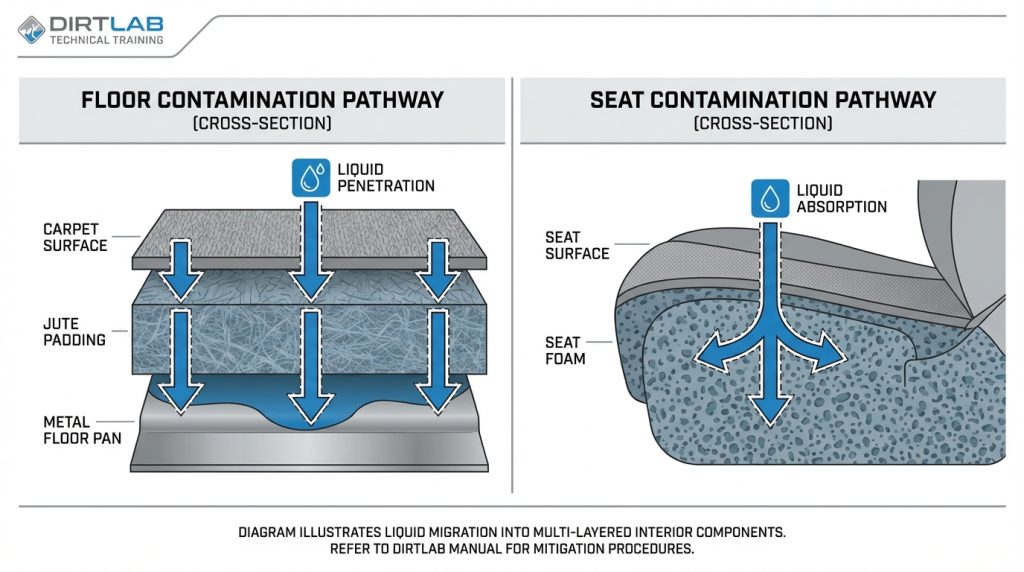
Underneath the carpet is a thick sponge-like material called jute padding. This padding is designed to reduce noise and provide insulation, but it also absorbs water extremely easily.
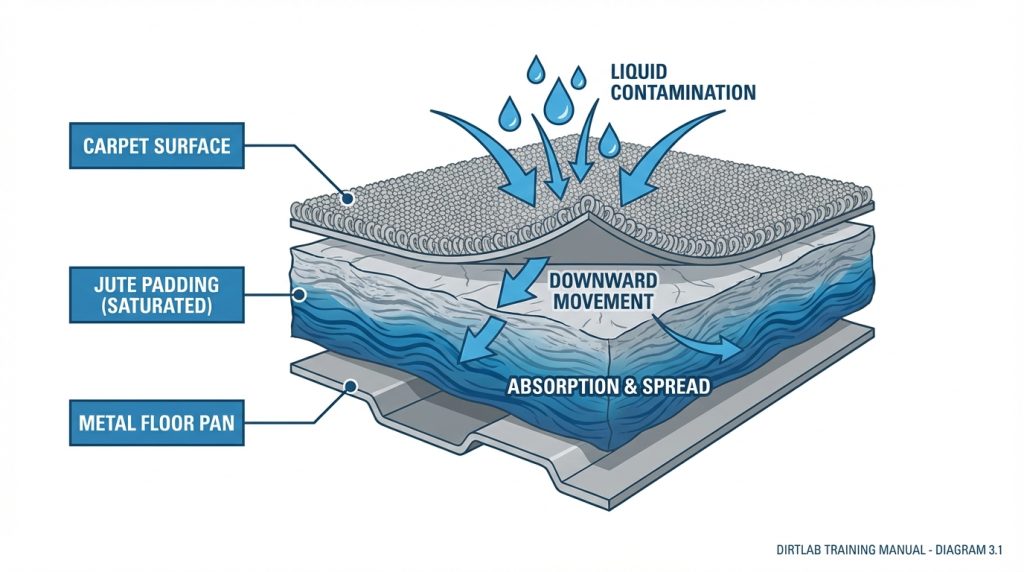
When a vehicle floods, water quickly saturates this padding. Once that happens, the interior essentially becomes a giant sponge.
The result can include:
• mold growth
• bacterial contamination
• strong odors
• corrosion inside the vehicle
• electrical issues
Many people attempt to fix this by shampooing the carpet or using a wet vacuum. Unfortunately, that usually does not solve the problem.
Think of it like washing your driveway and expecting the dirt underneath it to magically disappear. The water is still trapped underneath the surface.
This is why flooded vehicles often smell worse days or weeks after the event.
If your vehicle has experienced severe contamination, you can learn more about our professional remediation services here:
https://lavagr.com/biohazard-vehicle-cleaning/
Why Shampooing the Carpet Does Not Fix Flood Damage
A standard interior detail is not designed to fix flood damage.
You can pay almost anyone in Grand Rapids to shampoo the carpet of your car, but that does not address the real problem: the water trapped in the jute padding underneath the carpet.
Even with powerful carpet extractors, once the padding has absorbed water it can remain saturated for weeks.
At Lava GR, we use some of the most powerful carpet extraction equipment in the detailing industry, but even with professional tools, flood damage usually requires a much deeper process.
Our team often has to:
• remove seats
• remove trim panels
• lift the carpet
• inspect the floor pan
• remove soaked padding
• dry and sanitize the interior
This is the only way to properly remove the water that is trapped underneath the carpet.
You can learn more about our professional interior and exterior detailing services here:
https://lavagr.com/auto-detailing-grand-rapids-mi-2/
When the Carpet or Padding Needs to Be Replaced
In many flood cases, the jute padding must be replaced entirely.
Once this material becomes fully saturated, it can be nearly impossible to completely dry and sanitize it.
The best solution is often replacing it.
Replacing carpet or padding is a much bigger job than most people expect. It can require removing a large portion of the vehicle’s interior, including:
• seats
• interior trim
• center console components
• wiring covers
• carpeting and insulation layers
The reason the process costs money is because the vehicle has to be completely disassembled and reassembled properly.
If replacement is necessary, we can order factory OEM carpet and interior components and install them professionally.
At Lava GR we are not just detailers. We specialize in complete interior remediation and restoration, including replacing damaged interior components when needed.
What If Your Insurance Covers Flood Damage?
If your vehicle was flooded in Grand Rapids, the first thing to do is bring it to us and let us handle the process with your insurance company.
At Lava GR Auto Detailing, we work with insurance companies regularly on contamination and flood damage claims. Our team can inspect your vehicle, document the damage properly, and communicate with the insurance adjuster so you do not have to deal with the stress of figuring everything out yourself.
Flood damage claims often require detailed documentation showing:
• where the water entered the vehicle
• how far the water traveled into the interior
• what materials were contaminated
• what components must be removed or replaced
We handle this process all the time and can help move the claim forward by providing the photos, estimates, and documentation insurance companies require.
If the damage is covered, insurance may pay for repairs, replacement interior components, or even declare the vehicle a total loss depending on the severity of the flooding.
If replacement is required, we can source and install factory OEM interior components, including carpeting, insulation padding, and trim pieces, restoring the vehicle the right way.
You can schedule an inspection here:
https://lavagr.com/book-now/
What If Insurance Does Not Cover It?
If the vehicle is not covered by insurance, restoration is still possible in many cases.
Flood restoration typically starts around $1,000, depending on the vehicle and the level of damage.
The process may include:
• removing and drying the interior
• replacing jute padding
• deep extraction and sanitation
• deodorization treatments
• interior detailing
Every vehicle is different, and costs vary depending on how much water entered the vehicle and how long it remained inside.
The key thing is doing the repair correctly. Trying to shortcut the process usually results in lingering smells and mold growth later.
Why Experience Matters With Flood Restoration
Flood remediation is not a standard detailing job.
Our team at Lava GR has extensive experience with severe interior contamination and remediation, including biological contamination situations.
We even documented many of these restoration processes in our professional training material known as the Biohazard Detailing Playbook, which helps teach detailers how to properly diagnose and restore contaminated vehicle interiors.
This level of work requires experience, proper tools, and the willingness to disassemble the vehicle when necessary.
Training Detailers to Handle Extreme Situations
Many detailers want to learn how to handle situations like flood restoration, contamination cleanup, and advanced interior remediation.
That is why we created DirtLab, a training platform where detailers can learn the real systems we use in professional shops.
Detailers interested in learning these techniques can visit:
https://mydirtlab.com
For those who want hands-on training, we also offer in-person training programs at our shop in Grand Rapids where detailers can learn these processes in real-world scenarios.
Learn more about our training programs here:
https://lavagr.com/auto-detailing-training-grand-rapids-mi/
Protecting Your Vehicle After Restoration
Once a vehicle has been restored, many customers choose to protect the exterior as well.
Protective coatings can help keep vehicles cleaner and make maintenance easier over time.
You can learn more about our ceramic coating services here:
https://lavagr.com/ceramic-coatings-grand-rapids-mi/
Schedule Flood Cleanup in Grand Rapids
If your vehicle has taken on water, the worst thing you can do is wait.
The longer moisture remains inside a vehicle, the more damage it can cause to the interior and electrical systems.
At Lava GR Auto Detailing, we specialize in solving the difficult problems most shops avoid.
If your vehicle has experienced flooding or severe interior contamination, schedule an inspection and let our team help you determine the best path forward.
Book your appointment here:
https://lavagr.com/book-now/ or call/text (616) 577-7410 for more information.